 EN
EN


Manufacturing facilities worldwide depend on precision equipment to maintain competitive production schedules. The horizontal machining center has become a cornerstone technology for high-volume, precision-driven manufacturing environments. Understanding how a horizontal machining center improves production efficiency requires examining its operational design, workholding capabilities, and integrated automation features that distinguish it from conventional vertical configurations. This article explores the specific mechanisms through which a horizontal machining center delivers measurable gains in throughput, tool utilization, and overall shop-floor performance.
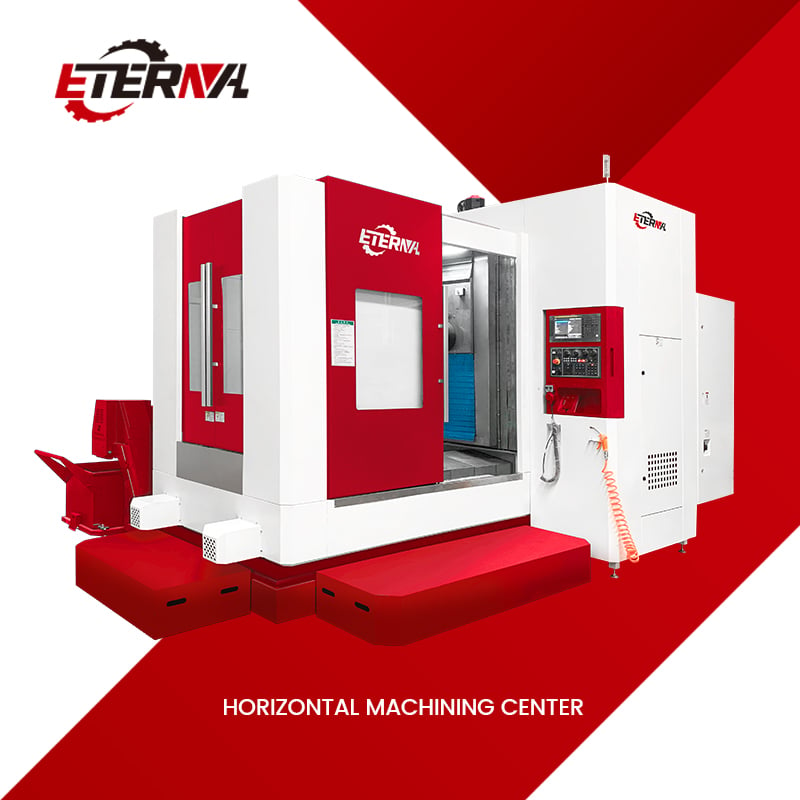
A horizontal machining center operates with the spindle oriented parallel to the machine base, enabling simultaneous access to multiple part faces without repositioning the workpiece. This fundamental design advantage translates into shorter setup times, reduced handling, and dramatically improved cycle efficiency compared to traditional machining approaches. When paired with modern automation components and strategic tool management, a horizontal machining center can achieve production rates that directly impact profitability, quality consistency, and on-time delivery performance across industries ranging from aerospace to automotive and heavy equipment manufacturing.
Multi-Face Machining and Reduced Part Repositioning
Complete Part Access in Single Setup
The core efficiency advantage of a horizontal machining center lies in its ability to complete multiple machining operations on different part faces without manual repositioning. A horizontal machining center typically features a rotating table that allows the spindle to access the top, sides, and often the bottom of a workpiece through coordinated axis movement and work-holding rotation. This eliminates the manual part handling, fixture changes, and re-zeroing procedures required on less sophisticated equipment. By completing more operations in a single machine setup, manufacturers using a horizontal machining center reduce non-cutting time dramatically, which directly increases the percentage of spindle runtime dedicated to actual material removal.
Minimized Operator Touch Time and Setup Cost
Setup efficiency represents a significant portion of total production cost, particularly for low-to-medium volume runs. A horizontal machining center consolidates multiple operations that might otherwise require transfer to secondary machines, reducing the cumulative setup and handling labor required per part. Operators working with a horizontal machining center invest time in initial fixture design and programming, but subsequent batches benefit from repeatable, consistent cycles. This setup amortization effect becomes increasingly pronounced as lot sizes grow, making a horizontal machining center particularly attractive for manufacturers producing regular families of similar components. The reduction in operator touch time per piece also decreases the probability of dimensional variation and handling damage.
Improved Tool Utilization and Extended Tool Life
Optimized Cutting Conditions Through Spindle Design
A horizontal machining center typically incorporates a powerful, high-rigidity spindle capable of sustained heavy cutting passes at optimized feeds and speeds. The horizontal orientation of the spindle minimizes deflection during interrupted cuts and provides superior coolant flow directly to the cutting zone, which is essential for thermal management and tool longevity. When a horizontal machining center maintains consistent coolant delivery and spindle rigidity throughout the cutting process, tool wear patterns become predictable, and tool life extends compared to machines with weaker spindle systems. Predictable tool life enables manufacturers to establish reliable tool-change schedules and minimize unexpected downtime caused by premature tool failure.
Automatic Tool Magazine and Reduced Manual Intervention
Most modern horizontal machining center installations include integrated automatic tool changers capable of holding dozens of tools in systematic order. A horizontal machining center equipped with an organized tool magazine and rapid-change capability can execute tool swaps in seconds, whereas manual tool changes consume minutes and introduce handling risk. The efficiency of tool selection within a horizontal machining center program means that each tool remains engaged for its optimal cutting duration before automatic removal and replacement. This systematic approach to tool management within a horizontal machining center workflow reduces material waste from worn tools continuing to cut, improves surface finish consistency, and allows real-time tool inventory monitoring that feeds planning and procurement decisions.
Automated Pallet Systems and Continuous Production Flow
Pallet Pool Dynamics and Unattended Operation
Advanced horizontal machining center installations frequently incorporate dual or multiple pallet changers that enable loading and unloading of one pallet while the machine actively machines another. A horizontal machining center with this dual-pallet architecture allows operators to stage multiple parts for processing while the spindle remains engaged with current work, effectively decoupling operator intervention from machine runtime. This pallet-exchange capability transforms a horizontal machining center into a semi-autonomous production cell capable of running unattended during appropriate shift windows, which is particularly valuable in facilities operating extended schedules or multiple shifts. The elimination of idle time waiting for an operator to unload completed parts and load new blanks directly improves machine utilization and throughput metrics.
Production Cell Flexibility and Rapid Changeover
Flexible horizontal machining center configurations support rapid job switching through standardized pallet fixtures and modular work-holding systems. When a horizontal machining center workholding system uses interchangeable fixture plates and quick-change interface standards, operators can transition from one part family to another with minimal machine downtime. This flexibility within a horizontal machining center environment enables production planners to respond to priority changes, accommodate rush orders, or balance machine loading across the shop without incurring extensive lost time. The rapid changeover capability of a modern horizontal machining center makes it well-suited to job shops and contract manufacturers serving diverse customer bases with varying production rhythms.
Advanced Process Control and Dimensional Consistency
Real-Time Monitoring and Predictive Maintenance Integration
Contemporary horizontal machining center systems incorporate sensors and process monitoring capabilities that provide real-time visibility into spindle load, spindle temperature, coolant condition, and tool wear progression. A horizontal machining center with integrated diagnostics allows programmers to detect and address cutting anomalies before they compromise part quality or cause tool breakage. Advanced horizontal machining center platforms can log performance data across production runs, establishing baseline metrics that enable predictive maintenance scheduling. This proactive approach using horizontal machining center monitoring systems reduces unplanned downtime and improves overall equipment effectiveness, directly supporting production efficiency goals and cost reduction targets.
Reduced Scrap and First-Pass Quality Achievement
The repeatability and rigidity characteristics inherent in a horizontal machining center design create conditions favorable for achieving tight tolerances and consistent surface finishes across production runs. A horizontal machining center eliminates the accumulation of geometric variation that occurs when parts must be repositioned between machines or manually adjusted during production. This inherent accuracy of a horizontal machining center directly reduces scrap rates and rework operations, which represent pure production losses. When parts consistently meet specification on the first pass from a horizontal machining center, the cost per acceptable piece drops substantially, and production throughput effectively improves without additional equipment investment.
FAQ
What specific industries benefit most from horizontal machining center efficiency gains?
Aerospace, automotive, medical device, and heavy equipment manufacturers derive the greatest benefit from horizontal machining center technology due to the complex, multi-face parts and tight tolerances common in these sectors. Applications requiring large batch runs with consistent quality demands and complex geometries are particularly well-suited to the capabilities of a horizontal machining center. Contract manufacturers serving these industries also benefit from the rapid changeover and flexible workholding features available on modern horizontal machining center systems.
How does a horizontal machining center compare to vertical machining in terms of daily production output?
A horizontal machining center typically outperforms a vertical machine by 30 to 50 percent on equivalent part families requiring multi-face operations due to reduced setup and repositioning time. The specific advantage depends on part complexity, lot size, and the degree of automation present on the horizontal machining center. For simple parts requiring single-face machining, the productivity advantage of a horizontal machining center may be minimal, while complex multi-face components see substantial throughput improvements on a horizontal machining center.
What is the typical payback period for investing in a horizontal machining center?
Payback timelines for a horizontal machining center typically range from two to four years depending on current production volumes, labor costs, and the number of machines replaced. Manufacturers already operating multiple machines for part production or those dealing with high labor costs realize faster payback on a horizontal machining center investment. When a horizontal machining center enables unattended operation or reduces headcount, the financial case strengthens significantly, though facility-specific factors require detailed calculation.